Licensing
EPR LICENSE
WHAT IS EPR LICENSE?
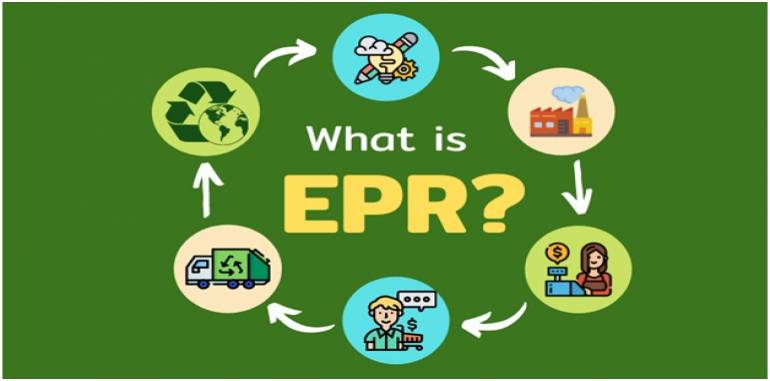
Extended Producer Responsibility (EPR) is an environmental
policy that makes producers responsible for the entire life cycle of the
products that they introduce on the market, from their design until end of life
(including waste collection and recycling).
Under EPR regulations, liable companies must mitigate the
environmental impacts of their products throughout the entire product life
cycle.
Starting in 2022, if you sell in France and/or Germany,
Marketplaces must confirm that you are complying with Extended Producer
Responsibility (EPR) regulations in the country where you are selling.
WHY CHOOSE US FOR EPR LICENSE?
Expertise: We take pride in being pioneers of swift and efficient EPR
License processing. Our dedicated team has a proven track record of delivering
results within 24 hours, saving you time and eliminating unnecessary delays.
Professional Prowess: We’re not just experts Our team’s
comprehensive knowledge of EPR License regulations and meticulous attention to
detail guarantee accurate and precise submissions every time.
Seamless Process: With us, the journey towards EPR License compliance is hassle-free.
Our simplified steps ensure that you can focus on your culinary creativity
while we handle the paperwork intricacies on your behalf.
Document Delivery: No more waiting! Once your registration is complete, we
promptly deliver your EPR License Certificate documents directly to your inbox.
CATEGORIES REQUIRING EPR LICENSE
Electrical and electronic equipment (EEE): This includes
information technology and telecommunication equipment, consumer electronics,
printers, copying equipment, and typewriters
Plastic packaging: This includes rigid plastic packaging, flexible plastic packaging,
plastic sheets, carry bags, and plastic sachets
Batteries: This includes batteries for electrical and electronic equipment
An EPR license is a certification that requires companies to
reduce the environmental impact of their products. It's mandatory for
manufacturers, importers, and producers of these products.
BENEFITS OF AN EPR LICENSE
1.
Environmental Responsibility:
Encourages companies to reduce
environmental impact by responsibly managing waste and adopting eco-friendly
practices.
2.
Compliance with Law:
Holding an EPR license ensures
companies comply with the e-waste management rules (2016) and plastic waste
management rules (2016) under Indian environmental law, thus avoiding penalties
and legal action.
3.
Sustainability:
Companies can enhance their corporate social
responsibility (CSR) profile by implementing environmentally sustainable
practices.
4. Better Waste
Management:
Through EPR, producers develop systems for better waste
management, reducing pollution and improving resource efficiency.
5. Brand Image and
Market Advantage:
Being eco-conscious improves a company’s brand image among
environmentally aware consumers and opens up access to global markets that
prioritize sustainability.
6. Economic
Opportunities:
EPR can lead to business
opportunities in recycling, recovery of materials, and partnerships with waste
management companies.
7. Circular Economy:
Promotes the shift to a circular economy where waste is
minimized, and materials are reused and recycled.
PROCESS OF OBTAINING AN EPR LICENSE
1. Identify
Applicability:
The first step is to identify if your company falls under the
EPR requirements. Producers, importers, and brand owners (PIBOs) dealing with
plastic or electronic products are key stakeholders.
2. Create an EPR Plan:
The applicant must develop an EPR Plan that outlines how they
will collect, treat, recycle, or dispose of post-consumer waste. The plan must
include:
·
Collection mechanism for the waste.
·
Channels for recycling or treatment of the
waste.
·
Infrastructure for waste management.
·
Awareness programs for consumers on
recycling and responsible disposal.
3. Submission of EPR
Plan:
Submit the EPR plan to the
Central Pollution Control Board (CPCB) or relevant State Pollution Control
Board (SPCB) via their official online portal.
Required documents include company details, product information, waste
collection plans, agreements with recycling agencies, etc.
4. Review by the
Pollution Control Board:
The CPCB or SPCB reviews
the application and EPR plan to ensure it aligns with waste management
regulations.
5.Engagement with Authorized
Recycling Agencies:
Producers can partner with
authorized recycling agencies or companies specializing in waste management to
fulfill their EPR obligations.
6. Approval of EPR
License:
If the EPR plan meets the
legal and environmental criteria, the CPCB/SPCB will issue the EPR License. The
license will specify the company’s responsibility to collect, recycle, and
manage a particular quantity of waste based on its production volume.
7. Implementation and
Compliance Reporting:
Once the license is issued, the company must begin implementing
the EPR plan and set up a system for collecting and recycling the post-consumer
waste.
Periodic reports on waste
management activities must be submitted to the pollution control board to
ensure compliance.
8. Renewal:
The EPR license needs to be renewed periodically, and the
company is required to stay updated with any changes in waste management rules
or regulations.
CONCLUSION
In general, you don’t need to arrange a large pile of documents
to register a EPR License. The amount of documentation required in a EPR
License is relatively lower than other forms of registration. Also, the process
of EPR License is not stringent, either. The parties interested in setting up a
EPR License should clearly define the role and responsibilities to avert future
conflicts. Priya group Team shall be happy to serve you in case you need any
assistance in the process of EPR License. Our professionals would ensure your
seamless process at a minimum cost invention.
📄 Document
Title: EPR LICENSE DOCUMENT
📜 Document Instructions:
Format: 🖼️ Image (JPG)
📄 Document
Title: COMPANY PROFILE OF EPR-(EXTENDED PROFDUCER RESPONSIBILITY LICENSE)
📜 Document Instructions:
Format: 📄 PDF
📄 Document
Title: APPLICATION FORM OF EPR LICENSE
📜 Document Instructions:
Format: 📝 Word Document
Service Related FAQ
What Is E- Waste?
E-Waste means electrical and electronic equipment, including solar photo-voltaic modules or panels or cells, whole or in part discarded as waste, as well as rejects from manufacturing, refurbishment and repair processes.
What is the EPR Registration for Electronic Manufacturers?
EPR Registration means to you more than anything if you're an electronic manufacturer. It means that you don't only provide the products, but you also care for the environment. This care factor would work in your favour in a world where people are looking for someone who can empathize with the world's tribulations
The E-Waste (Management) Rules, 2022 shall apply to whom?
The E-Waste (Management) Rules, 2022 shall apply to every Manufacturer, Producer, Recycler, Refurbisher and Dismantler involved in manufacture, sale, transfer, purchase, refurbishing, dismantling, recycling and processing of e-waste or electrical and electronic equipment listed in Schedule I, including their components, consumables, parts and spares which make the product operational.
Entities required to register at E-Waste EPR Portal?
As per the E-waste (Management) Rules, 2022, following entities are required to register at E-Waste -EPR Portal: (a) Manufacturer (b) Producer (c) Refurbisher (d) Recycler
What is Extended Producer Responsibility (EPR)?
‘Extended Producer Responsibility (EPR)’ means responsibility of any producer of electrical or electronic equipment as given in Schedule-I for meeting recycling targets as per Schedule-III and Schedule-IV, only through registered recyclers of E-Waste to ensure environmentally sound management of such waste.
What is ‘Producer Registration Certificates’?
Producer Registration Certificates’’ means a permission given by Central Pollution Control Board to meet EPR Obligation;
The fee structure for Producer for registration on EPR Portal under E-Waste (Management) Rules, 2022
Grant or Renewal of EPR Registration processing fees for Producers seeking EPR registration under E-Waste (Management) Rules 2022 is given as below: Annual E-Waste Recycling Target (MT) Proposed Charge (Rs.) < 50 MT 2500/- 50 MT to <100 MT 7500/- 100 MT to <1000 MT 1,50,000/ 1000 MT to <5000 MT 10,00,000/- >5000 MT 15,00,000/- Note: For Producers whose sales just started, the processing fee will be Rs. 10,000/-
What is Eligibility Criteria for EPR License ?
The following are the entities that must registered on the centralized portal to get the Extended Producer Responsibility certificate for Waste Management: Producer (P) Importer (I) Brand owner (BO) Plastic Waste Processor engaged in (a) recycling, (b) waste to energy, (c) waste to oil, and (d) industrial composting. The eligibility criteria for these entities are as follows: Anyone related to the electronics manufacturing or importing industry and is an importer. Only entities engaged in plastic waste processing such as recycling, co-processing, waste to energy, and waste to oil have to be registered as PWPs. PIBOs which are operational in one or two states/UTs are required to register with the concerned SPCB/PCC.
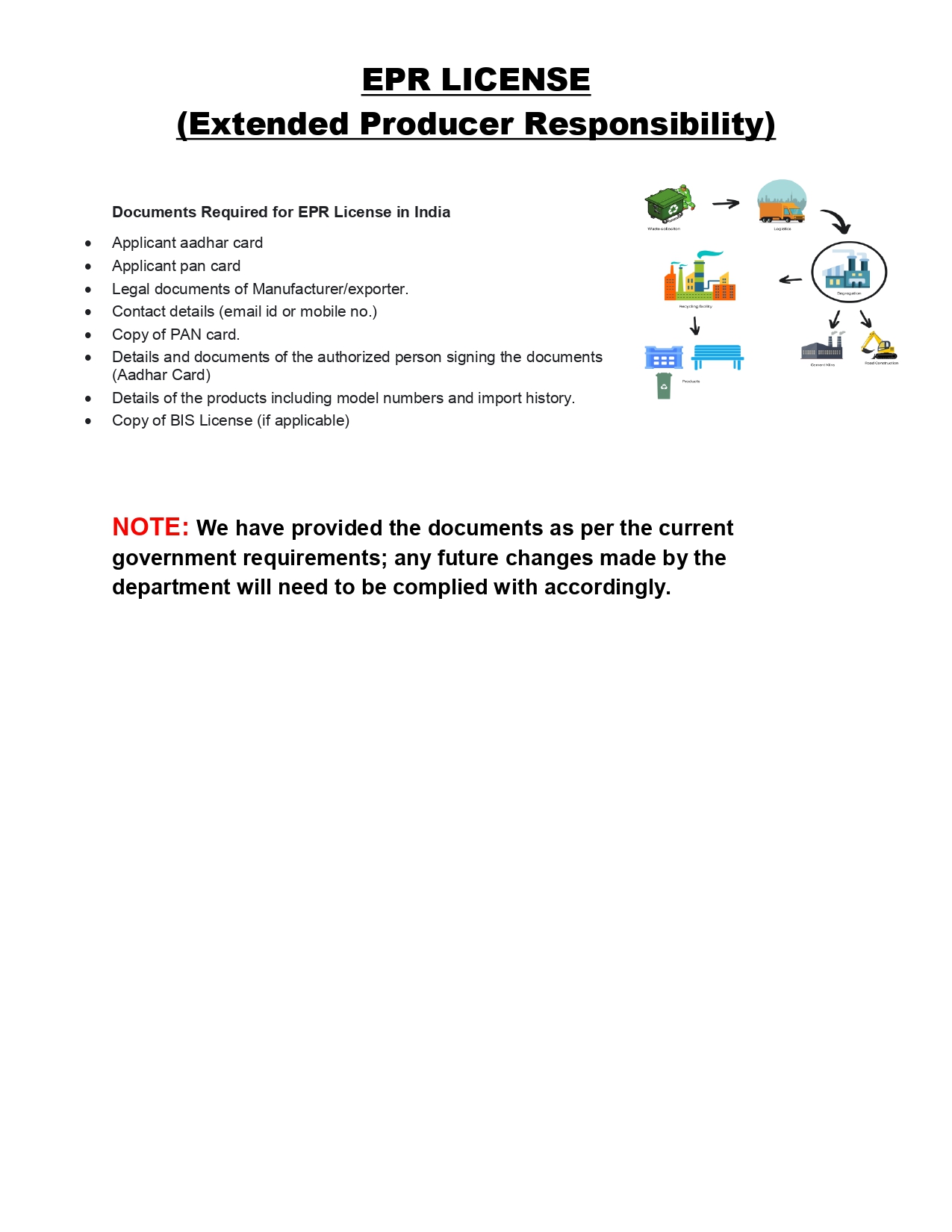
Documents Required for EPR License in India ?
Documents required to acquire the extended producer Responsibility certificate. Company’s PAN, CIN & GST. Authorized person PAN & Aadhar. Registration document in case of renewal (if applicable). Details (type & quantity) of products produced/marketed. Representative picture of Plastic packaging (Plastic packaging covering different EPR categories). Registration Certificate of District Industries Centre of the State Government or Union Territory (if applicable). Import-Export Code (IEC) if available. Scanned copy of the authorized person's signature.
Which Types of EPR Certification ?
Below are the different types of EPR certifications: EPR Registration for E-Waste Management EPR Registration for Plastic Waste Management EPR Registration for Battery Waste Management EPR Registration for Waste Tyres Management EPR Registration for Used Oil Management