Product Testing
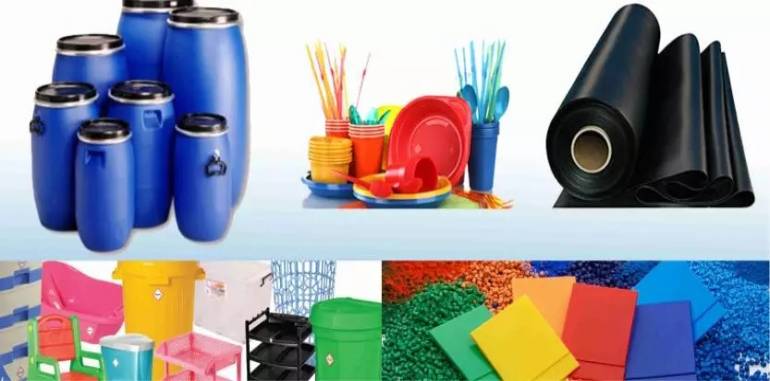
Polymers & Rubbers Testing
WHAT IS POLYMERS & RUBBERS TESTING?
Polymers and rubbers
testing encompasses a variety of tests and analyses
designed to assess the chemical, physical, and mechanical properties of polymer
and rubber materials. These materials are integral to multiple
industries—automotive, aerospace, medical, construction, and consumer
products—so testing ensures they meet stringent quality, safety, and
performance standards. Testing may evaluate polymer and rubber durability,
flexibility, resistance to chemicals and temperatures, and overall stability.
IMPORTANCE OF POLYMERS AND RUBBERS TESTING
- Quality Assurance: Testing
confirms that polymers and rubbers meet production specifications and
regulatory requirements for their intended use.
- Product Development: It helps manufacturers understand the behavior of new
polymer compounds or formulations, enabling product innovation.
- Safety and
Compliance: Ensures materials meet safety regulations (e.g.,
non-toxicity, flammability standards) for both manufacturers and end-users.
- Performance
Optimization: Tests can reveal how materials respond under stress,
temperature changes, and exposure to chemicals, enabling engineers to
select the best materials for their applications.
- Environmental
Impact: Evaluates the
biodegradability or recyclability of polymers, helping companies reduce
their environmental footprint.
TYPES OF POLYMERS AND RUBBERS TESTING
1.
Mechanical
Testing:
o Tensile Testing: Measures the strength of polymers or rubbers when stretched.
Important for applications requiring flexibility or elasticity.
o Compression Testing: Assesses a material’s resistance to compressive forces, often
for seals or gaskets.
o
Hardness
Testing: Determines the hardness of polymers and
rubbers, which correlates with resistance to deformation. Common methods
include Shore hardness (for softer materials) and Rockwell hardness (for harder
plastics).
o Flexural Testing: Measures the material's bending strength and
stiffness. Critical for applications like construction and automotive parts.
- Thermal Testing:
- Thermogravimetric
Analysis (TGA): Examines weight changes of a polymer or rubber sample
under heat, identifying its decomposition temperature.
- Differential
Scanning Calorimetry (DSC):
Analyzes how a material’s heat absorption or release changes with
temperature, identifying melting points, crystallization, and glass
transition temperatures.
- Thermal
Conductivity Testing: Measures a material’s ability to conduct heat,
essential for applications where temperature management is critical, like
electronics and automotive parts.
- Thermal Expansion
Testing: Measures expansion under heat
to predict performance in applications with temperature fluctuations.
3.
Chemical
Testing:
o
Fourier-Transform
Infrared Spectroscopy (FTIR): Identifies the chemical composition of polymers or rubbers by
analyzing their infrared absorption spectra.
o
Nuclear
Magnetic Resonance (NMR): Identifies molecular structure, helping
understand polymer cross-linking and arrangement.
o
Outgassing
and Volatile Organic Compounds (VOC) Testing: Assesses emissions from polymers and rubbers
to ensure they are safe and comply with environmental regulations.
o
Chemical
Resistance Testing: Evaluates how a polymer or rubber resists
chemical exposure, essential for materials used in chemical processing,
packaging, and biomedical applications.
4.
Environmental
and Aging Testing:
o
Weathering
Testing: Simulates environmental exposure to UV,
moisture, and temperature fluctuations to predict how polymers and rubbers will
perform outdoors.
o
Ozone
Resistance Testing: Tests resistance to ozone, as certain rubbers
and polymers are prone to cracking when exposed to high ozone levels.
o
Hydrolysis
Resistance Testing:
Determines a material’s stability in humid or water-rich environments, crucial
for construction, marine, and outdoor applications.
o
Biodegradability
Testing: Assesses the
environmental impact by determining how quickly a material breaks down under
natural conditions.
5.
Electrical
Testing (For insulating polymers and rubber):
o
Dielectric
Strength Testing: Measures the
electrical insulating properties, vital for polymers used in electrical
components and wiring.
o
Surface
Resistivity Testing:
Assesses a material’s ability to resist electrical flow along its surface.
o
Volume
Resistivity Testing:
Measures a material’s resistance to electrical current through its volume,
crucial for materials in electronic and electrical applications.
6.
Physical
Properties Testing:
o
Density
Testing: Determines material
density, which affects strength, durability, and buoyancy.
o
Melt
Flow Index (MFI): Measures how easily a
polymer melts and flows, important for molding processes.
o
Optical
Clarity Testing: Assesses the
transparency or opacity, crucial for products like packaging materials, lenses,
and optical devices.
o
Water
Absorption Testing:
Measures how much water a polymer or rubber can absorb, important for materials
exposed to moisture or humid environments.
7.
Fire
and Flammability Testing:
o
Flame
Resistance Testing:
Measures how easily a polymer or rubber catches and sustains a flame.
o
Smoke
Density Testing: Assesses the density
of smoke emitted when a material burns, relevant for construction materials.
o
Heat
Release Testing: Quantifies heat
generated during combustion, which is critical for fire safety regulations.
METHODS USED IN POLYMERS AND RUBBERS TESTING
1.
Dynamic
Mechanical Analysis (DMA): Measures mechanical properties under dynamic conditions
(stress, temperature), providing data on viscoelastic properties.
2.
Rheometry:
Assesses the flow and
deformation behavior of polymers, aiding in process optimization for molding or
extrusion.
3.
X-ray
Diffraction (XRD): Analyzes crystal
structure and degree of crystallinity in polymers, affecting properties like
strength and transparency.
4.
Scanning
Electron Microscopy (SEM): Provides a close look at surface texture, flaws, and structural
details, helpful in studying failure analysis.
- UV-Vis Spectroscopy: Measures how a polymer absorbs or transmits UV and
visible light, relevant for outdoor products.
APPLICATIONS OF POLYMERS AND RUBBERS TESTING
1.
Automotive: Ensures materials used in tires, seals, and hoses are resistant
to wear, temperature, and chemical exposure.
2.
Aerospace:
Tests polymers and
rubbers for structural integrity, lightness, and thermal stability.
3.
Medical
Devices: Ensures
biocompatibility, sterilization resistance, and non-toxicity for polymers used
in implants, tubing, and medical packaging.
4.
Consumer
Electronics: Confirms electrical
insulation properties for components like cables, connectors, and protective
casings.
5.
Construction:
Evaluates building
materials for durability, weather resistance, and fire safety standards.
REGULATORY STANDARDS FOR POLYMERS AND RUBBERS TESTING
- ASTM International: Provides standards such as ASTM D638 for tensile
properties of plastics and ASTM D2240 for rubber hardness testing.
- ISO (International
Organization for Standardization):
Offers standards like ISO 37 for rubber tensile testing, ISO 11357 for DSC
thermal analysis, and ISO 14607 for medical polymers.
- UL (Underwriters
Laboratories): Provides
safety standards for flammability and electrical insulation of polymers
used in electronics and construction.
- RoHS (Restriction
of Hazardous Substances):
Limits certain harmful substances in polymers used in electronic products.
- FDA (Food and Drug
Administration): Sets
guidelines for polymer safety in medical devices and food-contact
materials in the United States.
- REACH
(Registration, Evaluation, Authorisation and Restriction of Chemicals): Regulates chemical safety, including polymers used
within the European Union.
CHALLENGES IN POLYMERS AND RUBBERS TESTING
1.
Variability
of Properties: Polymers and rubbers
can have widely varying properties based on formulation, processing, and
environment.
2.
Complex
Material Behavior: Some tests require
understanding complex viscoelastic behavior, which requires advanced methods
and interpretation.
3.
Environmental
Sensitivity: Polymers can degrade
under UV, ozone, and temperature, making it challenging to predict their
long-term behavior accurately.
4.
Sustainability:
With increased demand
for biodegradable or recyclable materials, developing tests to assess these
properties is crucial but complex.
5.
High
Regulatory Standards: Meeting
stringent regulatory and industry standards often requires specialized testing
to ensure compliance.
FUTURE TRENDS IN POLYMERS AND RUBBERS TESTING
1.
Sustainable
Materials Testing: Increased focus on
testing biodegradable and recycled polymers to support sustainability efforts.
2.
Advanced
Simulation and Modeling:
Virtual testing and computer simulations that predict polymer and rubber
behavior under various conditions.
3.
Automation
in Testing: Automation reduces
testing times and increases precision, especially for routine quality checks in
manufacturing.
4.
Nanotechnology
in Polymers: New testing protocols
for nano-engineered polymers to understand their unique properties and
potential applications.
5.
Smart
Polymers and Responsive Materials: Testing methodologies to analyze how polymers react to stimuli
(e.g., temperature, pH), essential for biomedical and smart device
applications.
Testing polymers and
rubbers is essential for meeting industry standards and ensuring materials
perform as expected across applications.
📄 Document
Title: APPLICATION FORM OF POLYMERS & RUBBERS TESTING
📜 Document Instructions:
Format: 📝 Word Document
Service Related FAQ
What is product testing?
Product testing is the process of evaluating a product's performance, quality, and safety by testing it in real-world conditions or controlled environments. It helps ensure the product meets the standards before reaching the market.
Why is product testing important?
Product testing is crucial to ensure: • Safety and reliability • User satisfaction • Regulatory compliance • Durability and performance • Identifying potential issues or improvements
How are products tested?
Products can be tested in various ways, including: • Lab testing: Conducted in a controlled environment to analyze specific characteristics (e.g., strength, safety). • Field testing: Evaluates the product in real-life situations. • Consumer testing: A group of target users tests the product for feedback on usability and performance. • A/B testing: Comparing two versions of a product to determine which performs better.
Who conducts product testing?
Product testing is typically done by: • In-house teams within a company • Third-party testing organizations • Focus groups or test panels made up of consumers • Independent experts or laboratories
How long does product testing take?
The duration depends on the type of product and the scope of testing. Some products can be tested in a few weeks, while others might require months of testing, especially if they involve complex safety assessments or regulatory approvals.
What types of products are tested?
Nearly any type of product can undergo testing, including: • Electronics (e.g., phones, laptops) • Clothing and textiles • Food and beverages • Health and beauty products • Automotive parts • Household items • Toys and baby products
What are the different types of product tests?
Common types include: • Safety tests (e.g., checking for harmful chemicals or risks) • Performance tests (e.g., durability, battery life, usability) • Usability tests (e.g., how easy and intuitive it is for the user) • Market tests (e.g., focus groups, consumer feedback) • Compliance tests (e.g., ensuring the product meets industry standards)
Can consumers participate in product testing?
Yes! Many companies invite consumers to participate in product testing through online panels, focus groups, or direct consumer feedback. Some even offer free products or compensation for their time.
What are the benefits of product testing?
• Identifying flaws or design issues before launch • Increasing customer satisfaction by understanding consumer needs • Reducing the risk of product recalls or lawsuits • Gaining a competitive advantage with a high-quality product
How do companies select test participants?
Companies typically look for participants who represent their target audience. This could be based on factors like age, location, interests, or specific product needs. Participants may be selected through online sign-ups, social media calls, or market research firms.
What happens after testing?
After product testing, companies analyze the data collected, make necessary improvements, and adjust the design or production process. In some cases, further rounds of testing may be necessary before the product is launched.
What are the ethical considerations in product testing?
Ethical product testing involves: • Ensuring participants' privacy and confidentiality • Obtaining informed consent from testers • Avoiding misleading or harmful tests • Offering fair compensation to testers when applicable
How can I get involved in product testing?
• Sign up for product testing programs on company websites • Join consumer testing panels • Look for legitimate product testing websites that connect testers with brands • Follow brands on social media for announcements about new tests

