Product Testing
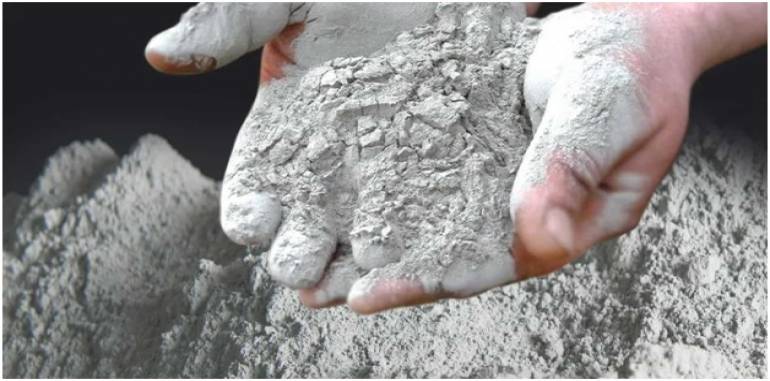
Cement Testing
WHAT IS CEMENT TESTING?
Cement testing assesses the quality, durability, and performance of cement to
ensure it meets construction standards and requirements. These tests are
critical for quality assurance in infrastructure, buildings, roads, and other
structures, as they verify cement’s binding properties and strength under
different conditions.
IMPORTANCE OF CEMENT TESTING
1.
Quality
Control: Ensures the cement
mix has the correct proportions and properties, critical for construction
durability.
2.
Safety
and Structural Integrity: Verifies that cement can withstand loads and stresses,
preventing structural failures.
3.
Compliance
with Standards: Guarantees that
cement meets specific national and international standards, such as ASTM, BIS,
and ISO.
4.
Durability
and Longevity: Tests for properties
like compressive strength and resistance to environmental factors to ensure
longevity.
5.
Cost-Effectiveness: Optimizes the mixture, reducing the need for
excessive raw materials or additives.
KEY STANDARDS FOR CEMENT TESTING
1.
ASTM
Standards: Includes ASTM C150
(portland cement), ASTM C109 (compressive strength), and ASTM C191 (setting
time).
2.
BIS
Standards (Bureau of Indian Standards): Includes IS 269 (ordinary portland cement), IS 1489 (portland
pozzolana cement), and IS 4031 (cement testing methods).
3.
EN
Standards: Includes EN 197-1
(common cements) and EN 196 (methods of testing cement).
4.
ISO
Standards: ISO 679 (strength
determination), ISO 9597 (setting time), and ISO 2930 (fineness testing).
5.
ACI
(American Concrete Institute): ACI 318 provides guidelines on using cement in concrete
structures.
TYPES OF CEMENT TESTING
1.
Physical
Testing: Determines physical
characteristics that affect cement’s performance.
o
Fineness
Test: Measures the particle
size of cement, impacting its reactivity and rate of hydration. Common methods
include sieving and Blaine air permeability.
o
Soundness
Test: Ensures cement volume
stability after setting, preventing cracks. Le Chatelier and autoclave
expansion tests are commonly used.
o
Setting
Time: Measures the time
cement takes to set, indicating workability. Tested with Vicat apparatus for
initial and final setting times.
o
Consistency
Test: Determines the water
content needed to achieve standard consistency, essential for hydration and
setting.
2.
Mechanical
Testing: Assesses cement’s
ability to withstand applied forces.
o
Compressive
Strength Test: Determines cement’s
compressive strength after specific curing periods, typically 3, 7, and 28
days. Mortar cubes are prepared and tested using a compression testing machine.
o
Tensile
Strength Test: Measures the tensile
strength of cement, usually performed using briquette molds. Although less
common, it indicates cement’s ability to resist cracking.
o
Flexural
Strength Test: Determines cement's
resistance to bending, typically conducted on cement mortar beams.
3.
Chemical
Testing: Analyzes cement’s
chemical composition to ensure quality and suitability.
o
Loss
on Ignition (LOI): Measures the weight
loss when cement is heated, indicating volatile content.
o
Insoluble
Residue Test: Assesses the
non-reactive residue, ensuring purity and effectiveness.
o
Sulfur
Trioxide (SO₃) Content: Measures
the sulfur content to prevent expansion and cracking in cement.
o
Alkali
Content Test: Assesses alkali
levels to minimize alkali-silica reaction (ASR), which can cause concrete
deterioration.
o
Free
Lime Content: Determines the amount
of unreacted lime in cement, which can affect soundness and stability.
4.
Durability
Testing: Assesses cement’s
ability to withstand environmental and chemical exposure.
o
Water
Permeability Test: Tests cement’s
resistance to water infiltration, important for structures exposed to water or
moisture.
o
Chloride
Penetration Test: Measures chloride ion
penetration to ensure corrosion resistance in reinforced concrete.
o
Sulfate
Resistance Test: Assesses cement’s
resistance to sulfate attack, important for marine and industrial environments.
o
Freeze-Thaw
Resistance: Tests cement’s
resilience against freezing and thawing cycles, ensuring durability in cold
climates.
o
Carbonation
Testing: Measures cement’s
resistance to carbonation, which can weaken concrete over time by reducing
alkalinity.
5.
Heat
of Hydration Testing:
Assesses the amount of heat released when cement mixes with water.
o
Calorimetry
Test: Measures the heat
generated during cement hydration, which can impact the risk of cracking and
thermal stability.
o
Adiabatic
and Semi-Adiabatic Tests: Simulates heat of hydration in large cement masses to prevent
internal stress and cracking in concrete.
6.
Non-Destructive
Testing (NDT): Evaluates properties
without damaging the cement structure.
o
Ultrasonic
Pulse Velocity Test:
Measures the velocity of ultrasonic waves passing through cement to assess
density and homogeneity.
o
Rebound
Hammer Test: Uses a spring-driven
hammer to assess surface hardness and strength.
o
Penetration
Resistance Test: Evaluates setting
time by measuring resistance to penetration.
7.
Specialized
Testing: Focuses on properties
relevant to specific applications.
o
Shrinkage
and Expansion Test:
Measures cement’s volume change during setting, crucial for avoiding cracks.
o
Porosity
Testing: Assesses the volume of
pores, impacting strength, permeability, and durability.
o
Alkali-Silica
Reaction (ASR) Testing:
Determines cement’s susceptibility to ASR, preventing damage from reactive
aggregates.
o
Workability
and Flowability Tests:
Includes flow table and slump tests to evaluate cement mix’s ease of use,
critical for construction efficiency.
KEY
EQUIPMENT USED IN CEMENT
TESTING
1.
Vicat
Apparatus: Determines the
initial and final setting times of cement.
2.
Compression
Testing Machine (CTM): Measures
compressive strength by applying load to cement mortar cubes.
3.
Le
Chatelier Apparatus:
Used for soundness testing, measuring expansion upon setting.
4.
Blaine
Air Permeability Apparatus: Measures fineness of cement powder.
5.
Autoclave:
Provides
high-temperature testing to assess expansion and soundness.
6.
Chemical
Analyzers: Includes spectrometers
and titration equipment for chemical composition analysis.
7.
Calorimeter:
Measures the heat of
hydration during cement curing.
8.
Rebound
Hammer: For non-destructive
testing, assessing surface hardness and strength.
9.
Ultrasonic
Pulse Velocity Tester:
Measures wave speed through cement for density and integrity assessment.
CEMENT TESTING LABS IN INDIA
1.
National
Council for Cement and Building Materials (NCCBM): Offers a wide range of tests on cement,
including strength, durability, and environmental suitability.
2.
Central
Soil and Materials Research Station (CSMRS): Provides cement testing for infrastructure
projects, including mechanical and chemical tests.
3.
Bureau
Veritas India: Conducts physical,
mechanical, and chemical testing, ensuring cement meets international
standards.
4.
TÜV
SÜD South Asia: Offers quality testing
services, including compressive strength and durability tests for cement.
5.
SGS
India: Provides testing
services for cement used in construction, ensuring compliance with regulatory
standards.
6.
Shree
Digvijay Cement: Laboratory facilities
for cement testing with a focus on compressive and setting time analysis.
7.
NABL-Accredited
Labs: Various NABL-certified labs across India
conduct standard cement tests for quality assurance.
PROCESS OF CEMENT TESTING
1.
Sample
Preparation: Collect samples in a
controlled environment to ensure consistency.
2.
Physical
and Chemical Tests:
Conducted to evaluate fineness, strength, setting time, soundness, and
composition.
3.
Data
Analysis: Test results are
compared to standards to confirm compliance and performance.
4.
Documentation: Results are recorded, and a Certificate of
Analysis (COA) is issued if standards are met.
5.
Adjustment
and Quality Control:
Test findings are used to optimize cement formulations and production processes
for future batches.
CHALLENGES IN CEMENT TESTING
1.
Consistency
in Sample Preparation:
Ensuring samples are representative and uniformly prepared.
2.
Environmental
Variability: Humidity and
temperature changes can impact test outcomes, especially in setting and
hydration tests.
3.
Evolving
Standards: Keeping up with
frequent updates to regional and international standards.
4.
Cost
of Specialized Equipment: Advanced testing, such as ultrasonic and calorimetry, requires
expensive equipment.
5.
Chemical
Stability: Cement’s reactive
nature can complicate chemical composition analysis, especially for
mixed or treated cements.
FUTURE TRENDS IN CEMENT TESTING
1.
Automation
and AI Integration: Automated
testing and AI-enhanced data analysis can improve testing accuracy,
consistency, and efficiency.
2.
Sustainable
Cement Testing: Increasing focus on
testing for low-carbon and eco-friendly cements, especially for green building
certifications.
3.
Advanced
NDT Techniques: Improving
non-destructive testing methods for better in-situ assessment of cement-based
structures.
4.
Real-Time
Monitoring Sensors:
Embedded sensors in concrete for real-time monitoring of hydration, temperature,
and setting.
5.
Use
of Digital Twin Technology: Combining real-time data from cement testing with digital
models to simulate and predict performance.
📄 Document
Title: APPLICATION FORM OF CEMENT TESTING
📜 Document Instructions:
Format: 📝 Word Document
Service Related FAQ
What is product testing?
Product testing is the process of evaluating a product's performance, quality, and safety by testing it in real-world conditions or controlled environments. It helps ensure the product meets the standards before reaching the market.
Why is product testing important?
Product testing is crucial to ensure: • Safety and reliability • User satisfaction • Regulatory compliance • Durability and performance • Identifying potential issues or improvements
How are products tested?
Products can be tested in various ways, including: • Lab testing: Conducted in a controlled environment to analyze specific characteristics (e.g., strength, safety). • Field testing: Evaluates the product in real-life situations. • Consumer testing: A group of target users tests the product for feedback on usability and performance. • A/B testing: Comparing two versions of a product to determine which performs better.
Who conducts product testing?
Product testing is typically done by: • In-house teams within a company • Third-party testing organizations • Focus groups or test panels made up of consumers • Independent experts or laboratories
How long does product testing take?
The duration depends on the type of product and the scope of testing. Some products can be tested in a few weeks, while others might require months of testing, especially if they involve complex safety assessments or regulatory approvals
What types of products are tested?
Nearly any type of product can undergo testing, including: • Electronics (e.g., phones, laptops) • Clothing and textiles • Food and beverages • Health and beauty products • Automotive parts • Household items • Toys and baby products
What are the different types of product tests?
Common types include: • Safety tests (e.g., checking for harmful chemicals or risks) • Performance tests (e.g., durability, battery life, usability) • Usability tests (e.g., how easy and intuitive it is for the user) • Market tests (e.g., focus groups, consumer feedback) • Compliance tests (e.g., ensuring the product meets industry standards)
Can consumers participate in product testing?
Yes! Many companies invite consumers to participate in product testing through online panels, focus groups, or direct consumer feedback. Some even offer free products or compensation for their time.
What are the benefits of product testing?
• Identifying flaws or design issues before launch • Increasing customer satisfaction by understanding consumer needs • Reducing the risk of product recalls or lawsuits • Gaining a competitive advantage with a high-quality product
How do companies select test participants?
Companies typically look for participants who represent their target audience. This could be based on factors like age, location, interests, or specific product needs. Participants may be selected through online sign-ups, social media calls, or market research firms.
What happens after testing?
After product testing, companies analyze the data collected, make necessary improvements, and adjust the design or production process. In some cases, further rounds of testing may be necessary before the product is launched.
What are the ethical considerations in product testing?
Ethical product testing involves: • Ensuring participants' privacy and confidentiality • Obtaining informed consent from testers • Avoiding misleading or harmful tests • Offering fair compensation to testers when applicable
How can I get involved in product testing?
• Sign up for product testing programs on company websites • Join consumer testing panels • Look for legitimate product testing websites that connect testers with brands • Follow brands on social media for announcements about new tests

