Product Testing
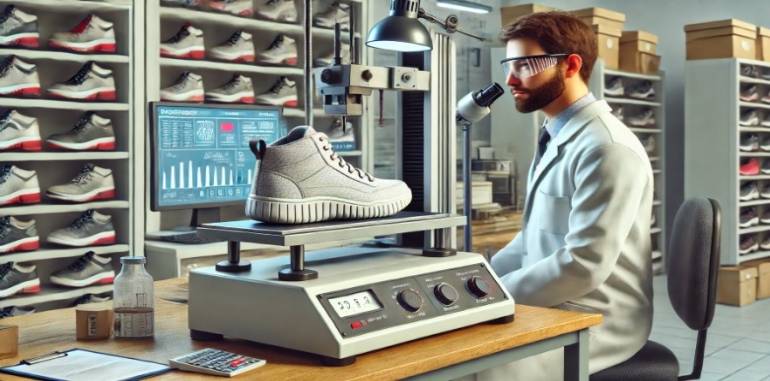
Shoes Testing
WHAT IS SHOES TESTING?
"Shoes testing" generally refers to testing the quality, durability, and
performance of footwear under various conditions. This process is crucial for
ensuring that shoes meet certain standards of comfort, safety, and longevity.
Here’s a full overview of the main types of testing performed in the footwear
industry:
1. MATERIALS TESTING
- Leather/Fabric
Testing: Tests the strength, stretch,
breathability, and wear resistance of the materials used in the shoes.
- Chemical Testing: Ensures that materials are free of harmful chemicals
like heavy metals, formaldehyde, and phthalates, which can be harmful to
wearers and the environment.
- Water Resistance
and Absorption: Tests if
waterproof materials can resist water or if the shoe can dry quickly.
- Abrasion Resistance: Evaluates how materials withstand rubbing and
scuffing.
2. PERFORMANCE AND
DURABILITY TESTING
- Flexing and Bending: Determines how well the shoe withstands bending and
flexing during normal use. The shoe is repeatedly bent at specific angles
to assess resistance to cracking and deformation.
- Impact Testing: Simulates the impact a shoe might experience during
sports or high-impact activities to evaluate how well it protects the
wearer.
- Outsole Testing: Checks the outsole for wear and tear, slip resistance,
and abrasion. This is essential to ensure longevity and traction.
- Tensile Strength: Measures the breaking strength of various shoe
components, such as laces, upper, and stitching, to ensure durability.
3. COMFORT AND FIT
TESTING
- Cushioning and
Shock Absorption: Ensures
that the shoe provides adequate support and reduces impact on the feet,
especially in athletic or high-impact footwear.
- Breathability: Tests how well the shoe material allows air and
moisture to pass through, which is essential for comfort and reducing
odor.
- Arch and Ankle
Support: Tests the structure of the
shoe to ensure that it provides proper support, which is crucial for
avoiding injuries, particularly in sports shoes.
4. SAFETY TESTING
- Slip Resistance: Measures the shoe’s traction on various surfaces to
reduce slip and fall risks. Slip resistance is vital for workplace safety
shoes.
- Puncture Resistance: Tests to ensure that the outsole can resist punctures,
which is essential for protective footwear.
- Toe Cap Impact: Safety shoes with a toe cap (like steel-toed boots)
undergo impact testing to ensure they meet protective standards.
5. ENVIRONMENTAL AND WEATHER
TESTING
- Temperature Testing: Simulates hot and cold environments to check if
materials change, crack, or become too rigid under temperature extremes.
- UV Exposure: Measures the effect of sunlight exposure on colors and
materials over time.
- Weatherproofing: Ensures the shoe withstands wet, humid, or snowy
conditions, essential for outdoor footwear.
6. WEAR AND TEAR TESTING
- Fatigue Testing: Shoes
are subjected to repeated wear-and-tear tests to see how they handle
long-term use.
- Lifespan Evaluation: Predicts
the overall lifespan of the shoe based on repeated, accelerated wear.
7. USER TRIALS AND
FEEDBACK
- Field Testing: Shoes are often tested by real users in real-world
conditions to gather practical feedback on fit, comfort, and performance.
- User Feedback
Surveys: Users provide feedback on how
the shoe feels after wearing it for extended periods, contributing
insights that lab tests might miss.
8. STANDARDS AND
CERTIFICATION
- Many footwear brands adhere to
international standards, like ASTM, ISO, or EN standards, which outline
specific criteria for shoe safety, quality, and durability. Passing these
tests certifies that shoes meet safety and quality requirements.
Shoes undergo these
tests at various stages, from prototype development to final production. This
multi-faceted testing approach is essential to meet customer expectations and
regulatory standards across different types of footwear.
📄 Document
Title: APPLICATION FORM OF SHOES TESTING
📜 Document Instructions:
Format: 📝 Word Document
Service Related FAQ
What is product testing?
Product testing is the process of evaluating a product's performance, quality, and safety by testing it in real-world conditions or controlled environments. It helps ensure the product meets the standards before reaching the market.
Why is product testing important?
Product testing is crucial to ensure: • Safety and reliability • User satisfaction • Regulatory compliance • Durability and performance • Identifying potential issues or improvements
How are products tested?
Products can be tested in various ways, including: • Lab testing: Conducted in a controlled environment to analyze specific characteristics (e.g., strength, safety). • Field testing: Evaluates the product in real-life situations. • Consumer testing: A group of target users tests the product for feedback on usability and performance. • A/B testing: Comparing two versions of a product to determine which performs better.
Who conducts product testing?
Product testing is typically done by: • In-house teams within a company • Third-party testing organizations • Focus groups or test panels made up of consumers • Independent experts or laboratories
How long does product testing take?
The duration depends on the type of product and the scope of testing. Some products can be tested in a few weeks, while others might require months of testing, especially if they involve complex safety assessments or regulatory approvals.
What types of products are tested?
Nearly any type of product can undergo testing, including: • Electronics (e.g., phones, laptops) • Clothing and textiles • Food and beverages • Health and beauty products • Automotive parts • Household items • Toys and baby products
What are the different types of product tests?
Common types include: • Safety tests (e.g., checking for harmful chemicals or risks) • Performance tests (e.g., durability, battery life, usability) • Usability tests (e.g., how easy and intuitive it is for the user) • Market tests (e.g., focus groups, consumer feedback) • Compliance tests (e.g., ensuring the product meets industry standards)
Can consumers participate in product testing?
Yes! Many companies invite consumers to participate in product testing through online panels, focus groups, or direct consumer feedback. Some even offer free products or compensation for their time.
What are the benefits of product testing?
• Identifying flaws or design issues before launch • Increasing customer satisfaction by understanding consumer needs • Reducing the risk of product recalls or lawsuits • Gaining a competitive advantage with a high-quality product
How do companies select test participants?
Companies typically look for participants who represent their target audience. This could be based on factors like age, location, interests, or specific product needs. Participants may be selected through online sign-ups, social media calls, or market research firms.
What happens after testing?
After product testing, companies analyze the data collected, make necessary improvements, and adjust the design or production process. In some cases, further rounds of testing may be necessary before the product is launched.
What are the ethical considerations in product testing?
Ethical product testing involves: • Ensuring participants' privacy and confidentiality • Obtaining informed consent from testers • Avoiding misleading or harmful tests • Offering fair compensation to testers when applicable
How can I get involved in product testing?
• Sign up for product testing programs on company websites • Join consumer testing panels • Look for legitimate product testing websites that connect testers with brands • Follow brands on social media for announcements about new tests

