Product Testing
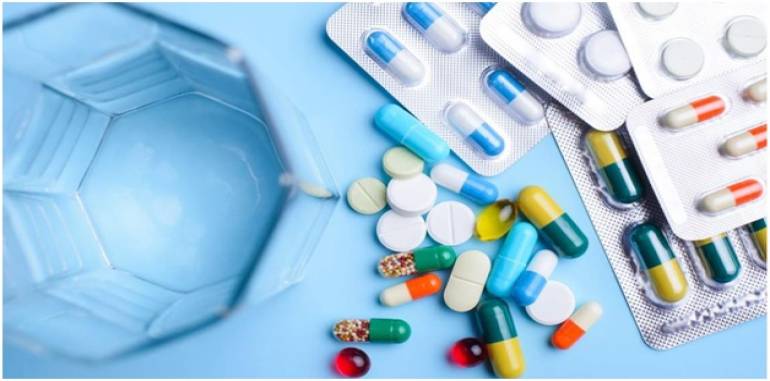
PHARMACEUTICAL TESTING
WHAT IS PHARMACEUTICAL TESTING?
Pharmaceutical testing is a
rigorous process designed to ensure the safety, efficacy, and quality of drugs
before they reach the market and throughout their lifecycle. This testing is
conducted in compliance with regulatory standards set by agencies like the FDA
(Food and Drug Administration), EMA (European Medicines Agency), and WHO (World
Health Organization). Pharmaceutical testing spans several stages, from drug
development and clinical trials to post-marketing surveillance, encompassing a
range of chemical, biological, and physical assessments.
KEY OBJECTIVES OF
PHARMACEUTICAL TESTING
1.
Ensure Safety and Efficacy: To confirm that the drug is safe for human
use and effectively treats the intended condition.
2.
Verify Quality and Consistency: To ensure that each batch meets strict
standards for identity, strength, purity, and composition.
3.
Comply with Regulatory Standards: To meet the requirements set by regulatory
agencies for approval and market entry.
4.
Detect and Prevent Contamination: To identify any contaminants, impurities, or
pathogens that could be harmful to patients.
5.
Monitor Stability and Shelf-life: To ensure the drug remains effective
throughout its labeled shelf life under specified storage conditions.
TYPES OF PHARMACEUTICAL
TESTING
Pharmaceutical
testing can be divided into several categories based on the stage of drug development
and t he specific properties being assessed. Here are the main types of tests:
1. Preclinical testing
Preclinical testing is
conducted on new drugs before they are tested in humans. These tests assess a
drug’s pharmacological profile, including toxicity, bioavailability, and
efficacy.
- In Vitro Testing: Lab tests on cells or tissues to examine drug effects
at a molecular or cellular level.
- In Vivo Testing: Animal studies to assess how the drug behaves in a
living organism, focusing on toxicity, pharmacokinetics, and
pharmacodynamics.
- Toxicology Testing: Evaluates the potential toxic effects of a drug,
including acute, sub-acute, and chronic toxicity.
- Pharmacokinetics (ADME): Examines Absorption, Distribution, Metabolism, and
Excretion of the drug in the body.
2. Clinical testing (clinical
trials)
Clinical testing is conducted
on human volunteers and is divided into phases to assess a drug’s safety, efficacy,
dosage, and side effects.
- Phase I: Small group of healthy volunteers; tests safety,
tolerability, and pharmacokinetics.
- Phase II: Larger group with the target condition; evaluates
efficacy, optimal dose, and side effects.
- Phase III: Large-scale trials; confirms efficacy, monitors side
effects, and compares the new drug to existing treatments.
- Phase IV: Post-marketing studies; gathers data on long-term
effects, adverse reactions, and real-world effectiveness.
3. Analytical testing
Analytical testing verifies
that the drug's composition, purity, and potency meet specified standards. This
testing is crucial for quality control and is performed both during drug
development and for batch release in manufacturing.
- Assay Testing: Determines the concentration of the active
pharmaceutical ingredient (API) in the drug formulation.
- Impurity Profiling: Identifies and quantifies any impurities, which could
impact the drug’s safety or efficacy.
- Dissolution Testing: Measures the rate at which the drug dissolves in a
solution, which is important for bioavailability.
Particle
Size Analysis: Ensures uniform particle size in formulations,
particularly for suspensions and inhalable
drugs, affecting drug absorption and stability.
4. Microbial testing
Microbial testing is essential
for sterile and non-sterile pharmaceutical products to ensure they are free of
harmful microorganisms.
Sterility
Testing: Ensures that injectable and ophthalmic drugs, as well as other
sterile products, are free from viable microorganisms.
Endotoxin
Testing: Detects bacterial endotoxins that can cause adverse reactions,
especially in injectables.
Microbial
Limits Testing: Verifies the number of microorganisms in non-sterile drugs and
ensures they meet acceptable limits.
Antimicrobial
Effectiveness Testing (AET): For preservative-containing
products, this test checks if preservatives are effectively preventing
microbial growth.
5. Stability testing
Stability testing examines how
environmental factors such as temperature, humidity, and light affect a drug’s
quality over time. This testing is essential for establishing the drug’s shelf
life and storage conditions.
- Long-term Stability
Testing:
Evaluates the product over
extended periods, often 1-3 years, at recommended storage conditions.
- Accelerated Stability
Testing: Exposes the product to
extreme conditions (e.g., high temperature and humidity) to predict its
shelf life faster.
- Stress Testing: Assesses the drug’s stability under various stress
conditions, including light, oxidation, and pH changes.
- Photostability Testing: Determines the effect of light exposure on drug
stability, especially for light-sensitive products.
6. Chemical and physical
testing
This type of testing ensures
that the drug’s physical and chemical properties remain within specified limits.
- pH Testing: Ensures that the pH of liquid formulations is within
the acceptable range, critical for stability and patient safety.
- Viscosity Testing: For liquid or semi-solid formulations, viscosity
affects flow properties and usability.
- Color and Clarity
Testing: Ensures uniform appearance,
which is crucial for patient confidence and quality perception.
- Hardness, Friability,
and Disintegration: For
tablets, these tests assess the mechanical integrity and dissolution
characteristics.
7. Biocompatibility testing
Biocompatibility testing is
conducted to ensure that the drug and any associated delivery device do not
produce adverse biological responses.
- Cytotoxicity Testing: Assesses if the drug causes toxicity to cells.
- Hemocompatibility
Testing: Ensures compatibility with
blood, essential for injectables.
- Sensitization and
Irritation Testing: For
topical or inhalable drugs, ensures no allergic reactions or irritation to
skin or mucous membranes.
8. Extractables and leachables
testing (e&l)
E&L testing identifies
chemicals that could migrate from packaging materials, containers, or delivery
devices into the drug product.
- Extractables Testing: Simulates conditions that may cause chemical migration
from packaging into the drug.
- Leachables Testing: Tests for actual migration under real-world conditions
over the drug’s shelf life.
- Importance: This testing ensures that packaging materials do not
negatively impact drug safety, efficacy, or stability.
9. In vivo bioavailability and
bioequivalence testing (ba/be)
Bioavailability and
bioequivalence studies assess how the drug is absorbed, distributed,
metabolized, and excreted in the body compared to a standard reference.
- Bioavailability Testing: Measures the rate and extent to which the active
ingredient becomes available at the target site.
- Bioequivalence Testing: Compares the new formulation’s performance to a
reference product, often required for generic drugs.
- Importance: These studies ensure that the drug delivers
consistent therapeutic effects across different batches and formulations.
REGULATORY COMPLIANCE AND
STANDARDS
Pharmaceutical testing follows
stringent regulatory standards that vary by country but often include:
- Current Good
Manufacturing Practice (cGMP):
Ensures consistent quality in manufacturing and testing.
- International Council
for Harmonisation (ICH) guidelines:
Covers various aspects of drug testing, such as stability (ICH Q1A),
impurities (ICH Q3A/B), and bioavailability/bioequivalence (ICH M9).
- Pharmacopeias: National and international pharmacopeias, like the USP
(United States Pharmacopeia), EP (European Pharmacopoeia), and JP
(Japanese Pharmacopoeia), provide standards for tests and specifications.
IMPORTANCE AND BENEFITS OF
PHARMACEUTICAL TESTING
1.
Patient Safety: Ensures drugs are safe for human use and
free of harmful contaminants or impurities.
2.
Efficacy and Consistency: Confirms that drugs provide the intended
therapeutic effect consistently across batches.
3.
Regulatory Compliance: Required for regulatory approval and ensures
adherence to global and regional standards.
4.
Risk Reduction: Early detection of potential safety or
quality issues reduces the risk of recalls, patient harm, and legal liability.
5.
Product Lifecycle Management: Helps maintain drug quality throughout its
lifecycle, including post-marketing surveillance.
CONCLUSION
Pharmaceutical testing is a
comprehensive and multi-step process that is critical to ensuring the safety,
efficacy, and quality of drugs. From preclinical assessments to stability and
microbial testing, each phase serves to protect patients and meet regulatory
standards. With advances in testing methodologies and stringent regulations,
pharmaceutical testing plays a vital role in bringing safe and effective drugs
to market and maintaining their quality throughout their shelf life.
📄 Document
Title: APPLICATION FORM OF PHARMACEUTICAL TESTING
📜 Document Instructions:
Format: 📝 Word Document
Service Related FAQ
What is product testing?
Product testing is the process of evaluating a product's performance, quality, and safety by testing it in real-world conditions or controlled environments. It helps ensure the product meets the standards before reaching the market
Why is product testing important?
Product testing is crucial to ensure: • Safety and reliability • User satisfaction • Regulatory compliance • Durability and performance • Identifying potential issues or improvements
How are products tested?
Products can be tested in various ways, including: • Lab testing: Conducted in a controlled environment to analyze specific characteristics (e.g., strength, safety). • Field testing: Evaluates the product in real-life situations. • Consumer testing: A group of target users tests the product for feedback on usability and performance. • A/B testing: Comparing two versions of a product to determine which performs better.
Who conducts product testing?
Product testing is typically done by: • In-house teams within a company • Third-party testing organizations • Focus groups or test panels made up of consumers • Independent experts or laboratories
How long does product testing take?
The duration depends on the type of product and the scope of testing. Some products can be tested in a few weeks, while others might require months of testing, especially if they involve complex safety assessments or regulatory approvals.
What types of products are tested?
Nearly any type of product can undergo testing, including: • Electronics (e.g., phones, laptops) • Clothing and textiles • Food and beverages • Health and beauty products • Automotive parts • Household items • Toys and baby products
What are the different types of product tests?
Common types include: • Safety tests (e.g., checking for harmful chemicals or risks) • Performance tests (e.g., durability, battery life, usability) • Usability tests (e.g., how easy and intuitive it is for the user) • Market tests (e.g., focus groups, consumer feedback) • Compliance tests (e.g., ensuring the product meets industry standards)
Can consumers participate in product testing?
Yes! Many companies invite consumers to participate in product testing through online panels, focus groups, or direct consumer feedback. Some even offer free products or compensation for their time.
What are the benefits of product testing?
• Identifying flaws or design issues before launch • Increasing customer satisfaction by understanding consumer needs • Reducing the risk of product recalls or lawsuits • Gaining a competitive advantage with a high-quality product
How do companies select test participants?
Companies typically look for participants who represent their target audience. This could be based on factors like age, location, interests, or specific product needs. Participants may be selected through online sign-ups, social media calls, or market research firms.
What happens after testing?
After product testing, companies analyze the data collected, make necessary improvements, and adjust the design or production process. In some cases, further rounds of testing may be necessary before the product is launched.
What are the ethical considerations in product testing?
Ethical product testing involves: • Ensuring participants' privacy and confidentiality • Obtaining informed consent from testers • Avoiding misleading or harmful tests • Offering fair compensation to testers when applicable
How can I get involved in product testing?
• Sign up for product testing programs on company websites • Join consumer testing panels • Look for legitimate product testing websites that connect testers with brands • Follow brands on social media for announcements about new tests

