Product Testing
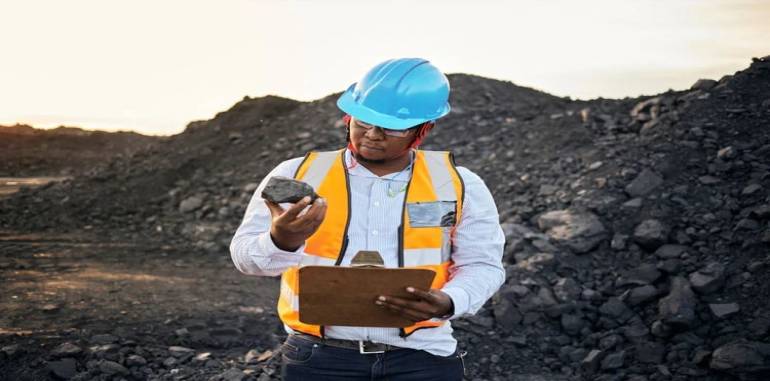
Coal Testing
COAL
TESTING
WHAT IS COAL TESTING?
Coal testing refers to the analysis of coal properties to determine its
quality, composition, and suitability for specific industrial uses, such as
energy generation, steel manufacturing, and chemical production. It involves
both physical and chemical tests that evaluate the energy content, impurities,
and other characteristics of coal. Coal testing ensures that the coal used in
different applications meets regulatory standards and performs efficiently and
safely.
Coal is classified
based on its rank (from lignite to anthracite) and grade, and these
classifications are often determined through detailed testing.
IMPORTANCE OF COAL TESTING
1.
Determines
Energy Efficiency: Testing evaluates
the calorific value (or energy content) of coal, which is essential for power
generation and other industrial processes.
2.
Ensures
Regulatory Compliance: Coal must meet
various environmental and safety regulations, particularly with regard to
sulfur content and other pollutants.
3.
Optimizes
Performance: Testing helps
determine the appropriate coal for specific applications (e.g., power plants,
steel production), ensuring efficiency and cost-effectiveness.
4.
Reduces
Environmental Impact: Tests help measure
the levels of impurities (like sulfur, nitrogen, and ash), allowing industries
to reduce emissions and environmental damage.
5.
Quality
Control: Testing ensures that
the coal delivered to consumers (e.g., power plants or industries) is of
consistent quality, meeting contract specifications.
6.
Prevents
Equipment Damage: By detecting
impurities, coal testing prevents the fouling, corrosion, or wear of industrial
equipment used in coal-fired power plants and other facilities.
TYPES
OF COAL TESTING
1.
Proximate
Analysis:
o Measures the moisture, ash, volatile matter,
and fixed carbon content of coal.
o Provides a quick assessment of the coal's
overall quality and combustion characteristics.
- Ultimate Analysis:
- Determines the elemental
composition of coal, including carbon, hydrogen, nitrogen, sulfur, and
oxygen.
- Used to assess the fuel's
energy content and its environmental impact (especially sulfur and
nitrogen, which contribute to acid rain).
3.
Calorific
Value (Gross and Net):
o Measures the energy content of coal. Gross
calorific value (GCV) refers to the total heat released when coal is burned,
including the latent heat of vaporized water. Net calorific value (NCV)
excludes the energy used to vaporize water.
o Indicates the efficiency of coal in producing
energy.
4.
Ash
Content:
o Ash is the non-combustible residue left after
coal is burned.
o High ash content can reduce the efficiency of
coal combustion and increase the cost of disposal and environmental compliance.
5.
Moisture
Content:
o Determines the amount of water in coal, which
affects its handling, transportation, and energy efficiency.
o Excessive moisture reduces the energy value
and increases transportation costs.
- Volatile Matter:
- Refers to the gases released
when coal is heated in the absence of air.
- High volatile matter indicates
that the coal will burn more easily and rapidly.
- Fixed Carbon:
- The solid fuel remaining after
volatile matter has been driven off.
- Represents the combustible
part of the coal and is directly related to the coal's energy content.
- Sulfur Content:
- Measures the amount of sulfur
in coal, which, when burned, can produce sulfur dioxide (SO₂),
contributing to air pollution and acid rain.
- Testing ensures that sulfur
levels meet environmental regulations.
- Coking Properties:
- For metallurgical coal (used
in steel production), testing evaluates coking properties such as
fluidity, swelling index, and coke strength after reaction (CSR).
- These properties determine how
well the coal will perform in coke ovens, where it is converted into coke
for blast furnaces.
10.
Hardgrove
Grindability Index (HGI):
- A measure of how easily coal
can be ground into fine particles.
- Essential for evaluating coal’s
behavior in pulverized coal combustion systems, such as in power plants.
11.
Ash
Fusion Temperature:
- Measures the temperature at
which ash softens, melts, and fuses into a solid mass, affecting the
performance of boilers.
- Important for designing
furnaces and ensuring efficient combustion without slagging or fouling.
- Trace Elements
Analysis:
- Detects elements like mercury,
arsenic, lead, and cadmium, which can pose environmental and health risks
when coal is burned.
- Helps industries minimize toxic
emissions.
13.
Chlorine
Content:
- Chlorine in coal can contribute
to corrosion in boilers and furnaces, making its measurement essential for
safe and efficient coal usage.
14.
Free
Swelling Index (FSI):
- Indicates the coal's ability to
swell and agglomerate when heated, crucial for assessing coking coals used
in the steel industry.
15.
Petrographic
Analysis:
- Examines the microscopic
composition of coal, identifying the type of coal macerals (organic
constituents) present.
- Provides insight into the
coal’s geological history and its behavior during combustion.
METHODS USED IN COAL TESTING
1.
Thermogravimetric Analysis (TGA):
o Measures weight changes in coal samples as
they are heated, providing data on moisture, volatile matter, and ash content.
2.
Calorimeter:
o Measures the calorific value of coal by
burning a sample in a controlled environment and measuring the heat released.
3.
Carbon-Sulfur
Analyzer:
o Determines the carbon and sulfur content in
coal using infrared detection after combustion in a high-temperature furnace.
4.
Ultimate
Analysis by Elemental Analyzer:
o Analyzes the elemental composition (C, H, N,
S, and O) using gas chromatography or similar techniques.
5.
Ash
Fusion Testing Equipment:
o Tests ash behavior at high temperatures to
determine its fusion point and slagging tendency.
6.
X-ray
Fluorescence (XRF):
o Identifies the presence of trace elements and
minerals in coal ash by measuring the X-ray emissions from a sample.
7.
Bomb
Calorimeter:
o Used to measure the calorific value of coal by
burning it in a pressurized, oxygen-rich environment and calculating the heat
output.
8.
Hardgrove
Grindability Apparatus:
o Measures how easily coal can be ground to fine
particles, simulating how it will behave in industrial mills.
APPLICATIONS OF COAL TESTING
1.
Power
Generation: Coal testing is
essential for power plants to select coal with the appropriate calorific value,
ash content, and combustion properties for efficient and cost-effective
electricity generation.
2.
Steel
Production: In the steel
industry, coal (particularly metallurgical coal) is tested for coking
properties to ensure it produces high-quality coke for blast furnaces.
3.
Cement
Manufacturing: Coal testing ensures
the correct type of coal is used in cement kilns to produce clinker efficiently
without damaging equipment.
4.
Industrial
Boilers: Testing ensures that
coal used in industrial boilers has the appropriate combustion characteristics
to reduce slagging, fouling, and emissions.
5.
Environmental
Compliance: Regulatory bodies
require coal testing to limit emissions of sulfur dioxide, nitrogen oxides,
particulate matter, and trace elements like mercury, ensuring compliance with
environmental laws.
6.
Research
and Development: Coal testing
supports the development of cleaner and more efficient coal combustion
technologies, including coal-to-liquids (CTL), gasification, and carbon capture
technologies.
REGULATORY STANDARDS FOR COAL TESTING
1.
ASTM
International: ASTM provides widely
recognized standards for coal testing, including proximate and ultimate
analyses (ASTM D3172), calorific value (ASTM D5865), and sulfur content (ASTM
D4239).
2.
ISO
(International Organization for Standardization): ISO standards cover various aspects of coal
testing, such as ISO 17246 for proximate analysis and ISO 1928 for calorific
value determination.
3.
Bureau
of Indian Standards (BIS):
Oversees coal testing in India, including IS 1350 for proximate analysis and IS
1355 for calorific value testing.
4.
Environmental
Protection Agency (EPA):
Sets emission limits for pollutants like sulfur dioxide, nitrogen oxides, and
mercury from coal-fired power plants, making coal testing essential for
compliance.
- European Standards
(EN): Provides standards for coal
quality, emission control, and efficiency, especially relevant in
coal-fired power plants in the European Union.
CHALLENGES IN COAL TESTING
1.
Complexity
of Coal Composition: Coal contains a
variety of elements and compounds that can vary greatly depending on its
geological origin, making testing and standardization complex.
2.
Environmental
Concerns: Stringent
environmental regulations require more thorough testing for pollutants and
emissions, increasing the cost and complexity of coal testing.
3.
Coal
Blending: In power plants and industrial uses, coal is
often blended from different sources to achieve desired properties, requiring
detailed testing to ensure consistent performance.
4.
Ash
Disposal: High ash content in
coal poses disposal challenges, as it must be tested for potential
environmental hazards before it can be safely discarded.
5.
Energy
Transition: As the world shifts toward cleaner energy
sources, coal testing must adapt to the development of cleaner coal
technologies, including gasification, coal liquefaction, and carbon capture and
storage (CCS).
FUTURE TRENDS IN COAL TESTING
1.
Cleaner
Coal Technologies: The development of
clean coal technologies, such as coal gasification and carbon capture, will
require new testing methodologies to ensure efficiency and environmental
compliance.
2.
Automation
and AI: Automated coal
testing.
📄 Document
Title: APPLICATION FORM OF COAL TESTING
📜 Document Instructions:
Format: 📝 Word Document
Service Related FAQ
What is product testing?
Product testing is the process of evaluating a product's performance, quality, and safety by testing it in real-world conditions or controlled environments. It helps ensure the product meets the standards before reaching the market.
Why is product testing important?
Product testing is crucial to ensure: • Safety and reliability • User satisfaction • Regulatory compliance • Durability and performance • Identifying potential issues or improvements
How are products tested?
Products can be tested in various ways, including: • Lab testing: Conducted in a controlled environment to analyze specific characteristics (e.g., strength, safety). • Field testing: Evaluates the product in real-life situations. • Consumer testing: A group of target users tests the product for feedback on usability and performance. • A/B testing: Comparing two versions of a product to determine which performs better.
Who conducts product testing?
Product testing is typically done by: • In-house teams within a company • Third-party testing organizations • Focus groups or test panels made up of consumers • Independent experts or laboratories
How long does product testing take?
The duration depends on the type of product and the scope of testing. Some products can be tested in a few weeks, while others might require months of testing, especially if they involve complex safety assessments or regulatory approvals.
What types of products are tested?
Nearly any type of product can undergo testing, including: • Electronics (e.g., phones, laptops) • Clothing and textiles • Food and beverages • Health and beauty products • Automotive parts • Household items • Toys and baby products
What are the different types of product tests?
Common types include: • Safety tests (e.g., checking for harmful chemicals or risks) • Performance tests (e.g., durability, battery life, usability) • Usability tests (e.g., how easy and intuitive it is for the user) • Market tests (e.g., focus groups, consumer feedback) • Compliance tests (e.g., ensuring the product meets industry standards)
Can consumers participate in product testing?
Yes! Many companies invite consumers to participate in product testing through online panels, focus groups, or direct consumer feedback. Some even offer free products or compensation for their time.
What are the benefits of product testing?
• Identifying flaws or design issues before launch • Increasing customer satisfaction by understanding consumer needs • Reducing the risk of product recalls or lawsuits • Gaining a competitive advantage with a high-quality product
How do companies select test participants?
Companies typically look for participants who represent their target audience. This could be based on factors like age, location, interests, or specific product needs. Participants may be selected through online sign-ups, social media calls, or market research firms.
What happens after testing?
After product testing, companies analyze the data collected, make necessary improvements, and adjust the design or production process. In some cases, further rounds of testing may be necessary before the product is launched.
What are the ethical considerations in product testing?
Ethical product testing involves: • Ensuring participants' privacy and confidentiality • Obtaining informed consent from testers • Avoiding misleading or harmful tests • Offering fair compensation to testers when applicable
How can I get involved in product testing?
• Sign up for product testing programs on company websites • Join consumer testing panels • Look for legitimate product testing websites that connect testers with brands • Follow brands on social media for announcements about new tests

