Registration
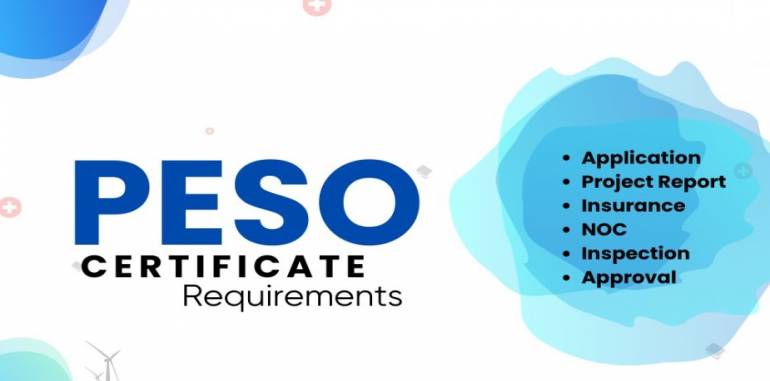
PESO
PESO stands for
the Petroleum and Explosives Safety Organization, which is an Indian
regulatory authority under the Department for Promotion of Industry and
Internal Trade (DPIIT), Ministry of Commerce and Industry. It is responsible
for overseeing the safety in the manufacture, storage, transport, and handling
of hazardous substances like petroleum, explosives, compressed gases, and other
chemicals.
KEY FUNCTIONS OF PESO
1.
Licensing
and Regulation: PESO issues licenses for the manufacture, storage, and
transportation of explosives, petroleum products, and hazardous chemicals.
2.
Safety
Standards: The organization formulates and enforces safety regulations to
prevent accidents related to hazardous substances.
3.
Inspections:
PESO inspects and monitors industries and facilities that handle explosive and
inflammable substances.
4.
Certification
of Equipment: It approves the design and functioning of pressure vessels,
safety devices, and equipment used in the petroleum and explosives industries.
5.
Legal
Framework: PESO operates under laws like the Explosives Act of 1884, the
Petroleum Act of 1934, and related rules such as the Gas Cylinder Rules and
Static and Mobile Pressure Vessels Rules.
CRITERIA FOR PESO CERTIFICATION
PESO certification is required for industries
dealing with petroleum and explosives, including storage, transportation, and handling
equipment.
Any equipment used in such industries, like gas cylinders or
pressure vessels, must conform to PESO's safety standards and undergo regular
inspections.
BENEFITS OF PESO COMPLIANCE
1. Safety
Assurance: By adhering to PESO regulations, businesses reduce the risk of
accidents, ensuring safety for workers and the public.
2. Legal
Compliance: Operating with a PESO license ensures that businesses comply with
Indian laws on hazardous materials.
3. Operational
Efficiency: Proper certification from PESO allows businesses to safely and
efficiently handle explosive and inflammable materials, minimizing disruptions.
4. International
Trade: PESO certification is often recognized internationally, enabling
companies to participate in global markets.
PROCESS OF PESO LICENSING AND CERTIFICATION
1. Application Submission:
Industries handling hazardous materials must apply for PESO certification via
the official PESO portal, providing detailed information about their processes,
equipment, and storage facilities.
2. Inspection: PESO conducts
inspections of the premises and equipment to ensure safety standards are met.
3. Approval: After successful
inspection and verification, PESO issues the necessary license or
certification.
4. Periodic
Renewals: PESO licenses are usually valid for a certain period and must be
renewed periodically.
📄 Document
Title: COMPANY PROFILE OF PESO REGISTRATION
📜 Document Instructions:
Format: 📄 PDF
📄 Document
Title: APPLICATION FORM OF PESO REGISTARTION
📜 Document Instructions:
Format: 📄 PDF
Service Related FAQ
WHAT IS PESO?
PESO ensures safety in the manufacturing, storage, and transportation of hazardous materials like petroleum, explosives, and chemicals.
WHO NEEDS PESO REGISTRATION?
Manufacturers, storage units, transporters, and dealers of hazardous materials require PESO registration.
WHAT TYPES OF LICENSES DOES PESO ISSUE?
PESO issues licenses for manufacturing, storage, transportation, and handling of hazardous substances.
HOW TO APPLY FOR PESO REGISTRATION?
Apply online via the official PESO portal and submit necessary documents, followed by an inspection.
WHAT DOCUMENTS ARE REQUIRED FOR PESO REGISTRATION?
Documents include business registration, safety measures, environmental clearance, and proof of premises.
HOW LONG DOES PESO REGISTRATION TAKE?
PESO registration typically takes 2 weeks to several months, depending on the type of application.
ARE PESO LICENSES TRANSFERABLE?
No, PESO licenses are generally non-transferable and need to be re-applied for if ownership changes.
IS PESO REGISTRATION MANDATORY FOR PETROL STATIONS?
Yes, petrol stations must obtain PESO registration for safe storage and handling of petroleum products.
WHAT SAFETY MEASURES ARE CHECKED DURING PESO INSPECTION?
Fire safety, emergency protocols, proper storage, and protective equipment are inspected.
HOW OFTEN DO I NEED TO RENEW MY PESO LICENSE?
If you face any problems during the barcode registration process, you should contact the relevant barcode issuing authority (e.g., GS1 India). They provide support for resolving registration, assignment, and usage issues.

