Certification
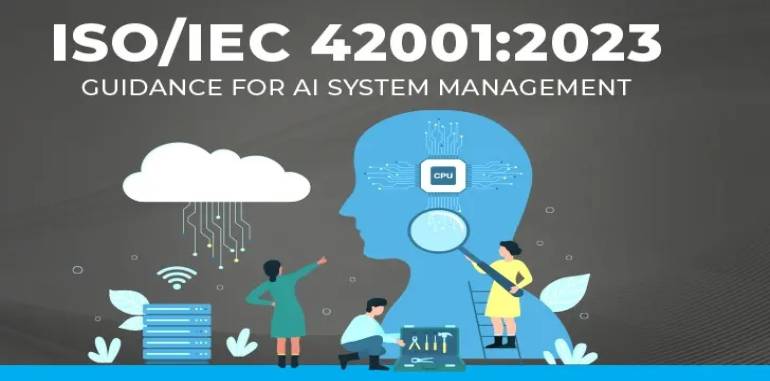
ISO 42001-ISO/IEC 42001:2023
🔹 ISO/IEC 42001:2023 – Meaning
ISO/IEC 42001:2023 is an international standard that provides requirements for an Artificial Intelligence Management System (AIMS).
📌 It helps organizations implement, manage, and govern AI systems responsibly, ensuring ethical, safe, and reliable AI deployment.
🔹 Purpose
- Establish a management framework for AI development and deployment
- Ensure AI systems are safe, ethical, transparent, and accountable
- Align AI practices with legal, social, and organizational requirements
- Provide guidance for risk management and continuous improvement in AI systems
🔹 Scope
- Applies to all organizations using, developing, or deploying AI systems
-
Covers AI lifecycle management, including:
- Design & development
- Deployment & operation
- Monitoring & evaluation
- Applicable across industries and AI applications
🔹 Key Components
1. 🛡️ Governance & Accountability
- Define roles and responsibilities for AI system owners, developers, and users
2. ⚖️ Risk Management
- Identify AI-related risks (bias, safety, security, privacy)
- Mitigation strategies and monitoring
3. 🔍 Transparency & Explainability
- Ensure AI decisions can be understood and explained
- Document algorithms, data sources, and models
4. 🏷️ Ethical & Legal Compliance
- Ethical guidelines (fairness, non-discrimination)
- Compliance with applicable AI laws and regulations
5. 📊 Performance & Monitoring
- Continuous assessment of AI accuracy, reliability, and safety
6. 📝 Documentation & Auditability
- Maintain records for accountability and external review
🔹 Benefits of ISO/IEC 42001 Certification
1. 🏢 Organizational Trust
- Demonstrates responsible AI governance to stakeholders and clients
2. ⚖️ Risk Mitigation
- Reduces risks of bias, errors, or non-compliance
3. 🌍 Market Advantage
- Differentiates organizations as ethical and reliable AI users
4. 📈 Operational Excellence
- Provides structured AI management framework for performance and compliance
5. 💡 Regulatory Readiness
- Helps comply with emerging AI laws and guidelines globally
🔹 Certification Process
Step 1: Gap Assessment
- Review current AI management practices against ISO 42001:2023 requirements
Step 2: Implementation
- Implement governance, risk management, ethical controls, and monitoring
Step 3: Internal Audit
- Assess compliance internally
Step 4: External Audit
- Accredited certification body audits the AI management system
Step 5: Certification
- Organization receives ISO/IEC 42001 certificate
Step 6: Surveillance
- Periodic audits to maintain certification
🔹 Who Needs ISO/IEC 42001?
- AI product developers and technology companies
- Organizations deploying AI in operations or customer-facing services
- Government or regulatory agencies using AI for decision-making
- Any company seeking ethical and accountable AI practices
✔️ Simple Summary
ISO/IEC 42001:2023 = International standard for AI Management Systems, providing a framework to ensure ethical, safe, transparent, and accountable use of artificial intelligence across organizations.
📄 Document
Title: APPLICATION FORM OF ISO 42001-ISO/IEC 42001:2023
📜 Document Instructions:
Format: 📝 Word Document
Service Related FAQ
1. What is System Certification?
System Certification is a formal process where an organization’s management system (like quality, environment, safety) is evaluated against international standards such as ISO.
2. Which standards come under System Certification?
Common standards include ISO 9001 (Quality), ISO 14001 (Environment), ISO 45001 (Safety), ISO 22000 (Food Safety), etc.
3. Why is System Certification important?
It improves credibility, ensures compliance, increases customer trust, and helps in business growth and tender eligibility.
4. How long does it take to get certified?
Typically, it takes 7 to 30 days depending on organization size, readiness, and documentation.
5. Who provides System Certification?
Certification is issued by accredited certification bodies approved by authorities like accreditation boards.

