Certification
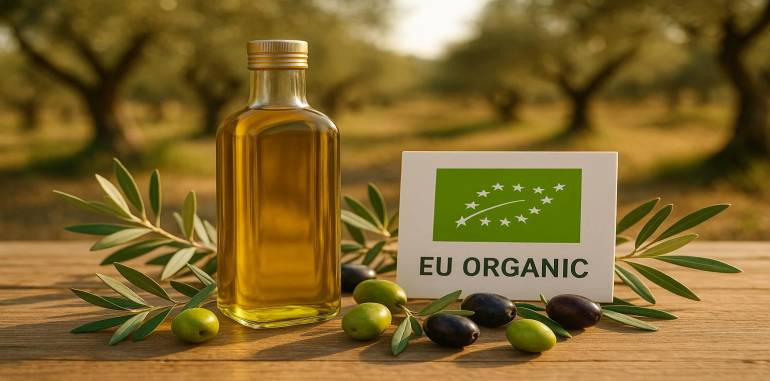
EU ORGANIC
EU Organic Certification – Complete Information
What is EU Organic?
The European Union Organic Certification is an official certification system for agricultural and food products produced according to organic farming standards defined by the European Union. Products certified under this system can use the EU Organic logo (“Euro Leaf”).
The certification is governed mainly by:
- Regulation (EU) 2018/848
- Earlier Regulation EC 834/2007 (replaced from 2022 onward)
Main Objectives of EU Organic Certification
The EU Organic system aims to:
- Protect consumer trust
- Ensure environmentally sustainable farming
- Restrict synthetic chemicals
- Improve soil fertility and biodiversity
- Ensure animal welfare
- Prevent GMO usage
Products Covered Under EU Organic
EU Organic certification applies to:
- Agricultural crops
- Processed foods
- Dairy products
- Honey
- Tea & coffee
- Spices
- Aquaculture products
- Livestock products
- Cotton and wool
- Essential oils
- Organic feed products
Basic Requirements for EU Organic Certification
1. No Synthetic Chemicals
The following are prohibited:
- Chemical fertilizers
- Synthetic pesticides
- Herbicides
- Growth hormones
- GMO seeds/materials
2. Conversion Period
Land must undergo a conversion period before organic status is granted.
Typical conversion period:
| Crop Type | Conversion Period |
|---|---|
| Annual crops | 2 years |
| Perennial crops | 3 years |
During this period:
- Organic practices must be followed
- Products usually cannot yet be sold as fully organic
3. Documentation System
Operators must maintain records of:
- Seed source
- Input purchases
- Fertilizer usage
- Pest control methods
- Harvest quantity
- Storage & traceability
- Sales records
Documentation is a major compliance requirement.
EU Organic Certification Process
Step 1 – Application
The farmer/company applies to an approved certification body.
Required documents generally include:
- Application form
- Farm map
- Land ownership/lease records
- Previous crop history
- Input details
- Processing details (if applicable)
Step 2 – Inspection
An inspector visits the farm/unit to verify:
- Farming practices
- Chemical usage history
- Buffer zones
- Storage system
- Traceability
- Processing hygiene
Annual inspections are mandatory.
Step 3 – Sample Testing
The certification body may take samples for laboratory testing:
- Pesticide residue
- GMO contamination
- Chemical contamination
Step 4 – Certification Decision
After successful inspection and compliance review:
- Organic certificate is issued
- Operator receives authorization to market products as organic
Step 5 – Labelling
Certified products may use:
- EU Organic Logo
- Certification body code
-
Origin declaration:
- “EU Agriculture”
- “Non-EU Agriculture”
- “EU/Non-EU Agriculture”
EU Organic Logo
The official logo is the green “Euro Leaf” symbol.
Conditions to use the logo:
- Minimum 95% agricultural ingredients must be organic
- Product must comply fully with EU organic rules
EU Organic Standards for India
India exports many organic products to Europe.
For Indian exporters:
- Certification generally operates under NPOP equivalence/recognized systems
- Certification bodies accredited by APEDA or recognized for EU exports are used
Common Indian export products:
- Rice
- Tea
- Spices
- Herbs
- Coffee
- Oilseeds
- Processed foods
Major Certification Bodies in India
Examples include:
- INDOCERT
- ECOCERT
- Control Union
- OneCert
- Lacon
- Bureau Veritas
These bodies conduct inspections and certification for EU Organic exports.
Important EU Organic Rules
Traceability
Every product must be traceable from farm to final buyer.
Buffer Zone
Organic farms require separation from conventional farms to avoid contamination.
Parallel Production Restrictions
If both organic and conventional farming occur together:
- Strict segregation is required.
Processing Requirements
Organic and non-organic materials must be:
- Stored separately
- Processed separately
- Properly labelled
EU Import Requirements
Organic products entering the EU must have:
- Electronic Certificate of Inspection (e-COI)
- TRACES registration/documentation
Without e-COI:
- Products may not clear EU customs.
Inspection Frequency
Normally:
- At least one inspection every year
Additional surprise inspections may occur if risk is high.
Non-Compliance Consequences
If violations are found:
- Suspension
- Product declassification
- Certificate withdrawal
- Export rejection
- Financial penalties
Major violations include:
- Pesticide contamination
- False records
- GMO usage
- Mixing conventional products with organic products
Benefits of EU Organic Certification
For Businesses
- Access to EU market
- Higher export value
- Better international credibility
- Premium pricing opportunities
For Consumers
- Reduced chemical exposure
- Environmental sustainability
- Better traceability
- Higher trust in food quality
Cost of EU Organic Certification
Costs depend on:
- Farm size
- Product category
- Number of sites
- Processing activities
- Export scope
Typical expenses include:
- Application fee
- Inspection fee
- Annual certification fee
- Residue testing charges
- Travel expenses of inspector
Group certification helps reduce costs for small farmers.
Difference Between NPOP and EU Organic
| Parameter | NPOP (India) | EU Organic |
|---|---|---|
| Governing Authority | APEDA | European Union |
| Main Purpose | India + exports | EU market |
| Applicable Regulation | NPOP Standards | Regulation EU 2018/848 |
| Logo | India Organic | EU Organic Logo |
| Export Acceptance | Depends on importing country | Accepted across EU |
📄 Document
Title: APPLICATION FORM OF EU ORGANIC
📜 Document Instructions:
Format: 📄 PDF
Service Related FAQ
What is product certification?
Product certification is the process where a product is tested and evaluated by an accredited third party to ensure it meets specific safety, quality, or performance standards. This certification confirms that the product complies with regulatory or industry standards.
Why is product certification important?
Certification ensures product safety, reliability, and compliance with laws and regulations. It builds consumer trust, provides a competitive edge, and can be a legal requirement in many industries.
What types of products require certification?
The need for certification depends on the product and industry. Commonly certified products include electronics, toys, medical devices, food products, and construction materials. It may also be required for products with environmental or energy-related claims, like energy-efficient appliances.
What are the common types of product certifications?
• Safety Certifications: Ensures products meet safety standards (e.g., CE marking in Europe, UL for electronics in the U.S.). • Quality Certifications: Demonstrates consistent product quality (e.g., ISO 9001). • Environmental Certifications: For products that meet eco-friendly standards (e.g., Energy Star, EPEAT). • Organic Certifications: For products made with organic materials (e.g., USDA Organic). • Health Certifications: For products in the medical, pharmaceutical, and food industries (e.g., FDA approval, NSF certification).
How do I get my product certified?
The process varies by certification type and country. Generally, it involves: 1. Identifying the right certification body: Choose an accredited agency or organization for the certification. 2. Testing: The product may need to undergo testing for quality, safety, or performance. 3. Compliance with standards: Ensure the product meets the relevant standards or regulations. 4. Certification application: Submit an application and relevant documentation. 5. Audit and inspection: Some certifications require an audit or on-site inspection. 6. Receiving the certification: If the product passes all requirements, you will receive the certification.

