Training
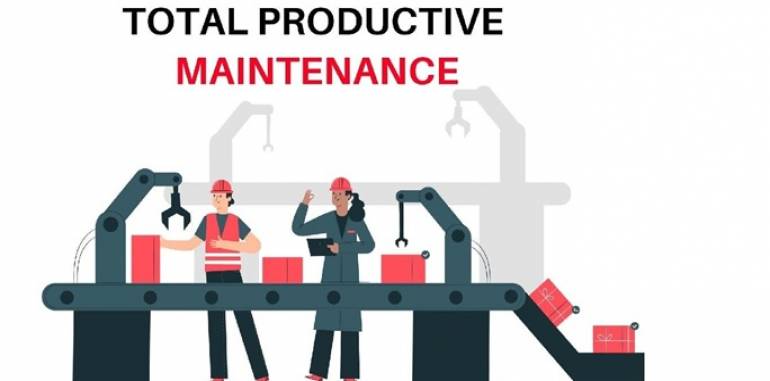
TOTAL PRODUCTIVE MAINTENANCE
Total Productive
Maintenance (TPM) training equips employees with the knowledge
and skills to maintain equipment effectively, improve productivity, and
minimize downtime. Originating from the manufacturing industry, TPM focuses on
creating a culture of shared responsibility for equipment maintenance among
operators, maintenance staff, and management. It’s especially relevant in Lean
and Six Sigma environments, where maintaining operational efficiency is
essential.
Here’s an overview
of what TPM training involves and how it’s implemented.
WHAT IS TOTAL PRODUCTIVE
MAINTENANCE?
Total Productive
Maintenance (TPM) is a proactive and preventive maintenance approach that aims to
maximize equipment effectiveness. TPM’s goal is to eliminate all causes of
equipment downtime, slow performance, and defects by involving all employees in
the maintenance process. TPM is built around eight key pillars, which cover all
aspects of equipment management and continuous improvement:
1.
Autonomous
Maintenance
2.
Planned
Maintenance
3.
Focused
Improvement
4.
Quality
Maintenance
5.
Early
Equipment Management
6.
Education
and Training
7.
Safety,
Health, and Environment
8.
Administrative
& Office TPM
OBJECTIVES OF TPM
TRAINING
1.
Understand
TPM Principles and Goals – Grasp the fundamentals of TPM and its importance in achieving
high equipment efficiency and productivity.
2.
Implement
the Eight TPM Pillars – Apply the eight TPM pillars to improve maintenance practices
and reduce downtime.
3.
Empower
Operators to Maintain Equipment – Teach operators to perform basic maintenance and inspections to
prevent issues.
4.
Identify
and Eliminate Equipment Losses – Learn to identify six major losses in equipment (e.g.,
breakdowns, setup time, and defects) and implement methods to reduce them.
- Build a Proactive
Maintenance Culture –
Establish a collaborative culture where everyone takes ownership of
equipment performance.
HOW TPM TRAINING IS
DELIVERED
1. INTRODUCTION TO TPM
AND ITS IMPORTANCE
- Content: Overview of TPM’s goals, benefits, and impact on
productivity, cost savings, and overall equipment effectiveness (OEE).
- Activities: Discussing examples and case studies where TPM has
significantly improved operational efficiency and decreased downtime in
various industries.
- Outcome: Participants gain an understanding of why TPM is
critical to manufacturing and continuous improvement.
2. UNDERSTANDING AND
IMPLEMENTING THE EIGHT PILLARS OF TPM
- Content: Explanation
of each TPM pillar, with specific focus on the purpose, activities, and
outcomes associated with each.
- Activities:
- Autonomous
Maintenance: Training on routine tasks
(e.g., cleaning, inspection) that operators perform to keep equipment in
optimal condition.
- Planned
Maintenance: Developing a preventive
maintenance schedule to reduce breakdowns.
- Focused
Improvement: Identifying and executing
small, targeted improvements.
- Quality Maintenance: Implementing measures to ensure equipment
consistently produces quality outputs.
- Safety, Health,
and Environment: Ensuring
a safe working environment.
- Outcome: Participants learn how to apply each pillar in their
respective areas and understand its role in the overall TPM framework.
3. AUTONOMOUS
MAINTENANCE TRAINING FOR OPERATORS
- Content: Emphasis on training operators to take basic
maintenance responsibilities, including cleaning, inspecting, and
lubricating equipment.
- Activities: Hands-on sessions where operators practice tasks like
cleaning, tightening loose components, checking for wear, and documenting
findings.
- Outcome: Operators gain skills and confidence in maintaining
equipment, reducing dependency on specialized maintenance staff.
4. USING TOOLS FOR
IDENTIFYING AND REDUCING EQUIPMENT LOSSES
- Content: Introduction to the “Six Big Losses” of equipment
effectiveness (breakdowns, setup and adjustment, minor stoppages, speed
reduction, quality defects, and rework).
- Activities: Participants use Pareto charts and other analysis
tools to identify and prioritize equipment losses in sample scenarios.
- Outcome: Participants develop an understanding of how to
identify and analyze sources of inefficiency in equipment performance.
5. IMPLEMENTING PLANNED
MAINTENANCE SCHEDULES
- Content: Training on creating and managing maintenance
schedules, including frequency of inspections, replacement of parts, and
timing for overhauls.
- Activities: Participants develop a sample maintenance schedule and
assess its effectiveness in preventing breakdowns based on hypothetical
data.
- Outcome: Participants learn to create a balanced maintenance
plan that minimizes unplanned downtime and optimizes equipment lifespan.
6. PROMOTING QUALITY
MAINTENANCE
- Content: Techniques for maintaining quality output by ensuring
that equipment runs optimally and consistently.
- Activities: Practical exercises include creating a checklist for
maintaining equipment settings and calibrations, analyzing defect data,
and identifying preventive actions.
- Outcome: Participants understand how to monitor and control
equipment to maintain consistent product quality.
7. TRAINING AND
DEVELOPMENT
- Content: Emphasis on continuous training to build skills
across all levels, ensuring that everyone is capable of handling their TPM
responsibilities.
- Activities: Workshops and refresher training sessions to reinforce
TPM principles and teach new techniques as needed.
- Outcome: Improved skill levels across the team, fostering a
proactive approach to maintenance.
8. BUILDING A PROACTIVE
MAINTENANCE CULTURE
- Content: Techniques
for creating a maintenance-friendly culture where everyone from operators
to management takes responsibility for TPM.
- Activities: Group discussions on the benefits of a proactive
approach, challenges in implementation, and strategies for reinforcing TPM
behaviors.
- Outcome: Participants learn ways to instill a shared sense of
responsibility for equipment maintenance and performance.
TRAINING TECHNIQUES FOR
EFFECTIVE TPM TRAINING
1.
Hands-On
Workshops – Real equipment
scenarios help participants learn to conduct inspections, routine maintenance,
and troubleshooting.
2.
On-the-Job
Training (OJT) –
Practical application of TPM principles in actual work environments to
reinforce concepts learned in training.
3.
Cross-Functional
Team Collaboration – Involving operators, maintenance staff, engineers, and managers
to create a unified approach to TPM.
4.
Case
Studies and Success Stories – Review of real-world TPM implementations to illustrate
successful applications and problem-solving.
5.
TPM
Metrics and Goal-Setting – Training participants on how to set goals and track TPM metrics
such as OEE (Overall Equipment Effectiveness) to monitor progress.
BENEFITS OF TPM TRAINING
1.
Increased
Equipment Uptime: TPM reduces equipment
failures and unplanned downtime, ensuring that machines are available when
needed.
2.
Improved
Productivity and Efficiency: Autonomous maintenance and preventive strategies keep equipment
running at peak efficiency, reducing delays and production stops.
3.
Higher
Product Quality: Quality maintenance
and proactive measures prevent defects, resulting in consistent output that
meets quality standards.
4.
Reduced
Maintenance Costs: By preventing
equipment breakdowns, TPM lowers the cost of repairs and replacement parts,
extending equipment lifespan.
5.
Enhanced
Employee Engagement: When
operators take responsibility for maintenance, they develop a sense of
ownership and pride in the equipment they operate.
6.
Safer
Work Environment: TPM’s focus on safety
reduces risks of accidents and injuries, promoting a healthier workplace.
Overall, TPM training
provides organizations with a structured approach to maintenance that maximizes
equipment efficiency, minimizes downtime, and engages all employees in a
culture of shared responsibility for asset performance.

